From the mid-1980s to the mid-1990s, Nungambakkam had its own unofficial landmark. A modest three-feet wall at Veerabadran Street. To outsiders, it was just a wall. To us, it was history, identity, and a way of life. We were known as the “Wall Friends”.
Nobody remembers when a small amount of sand was first placed at the foot of the wall, or why. But that simple addition made it perfect for sitting, leaning, and spending endless hours. Behind it stretched nearly fifty yards of open space before my ancestral home. A house that has gone through multiple remodellations, but never quite replaced the memories that stood in front of it.
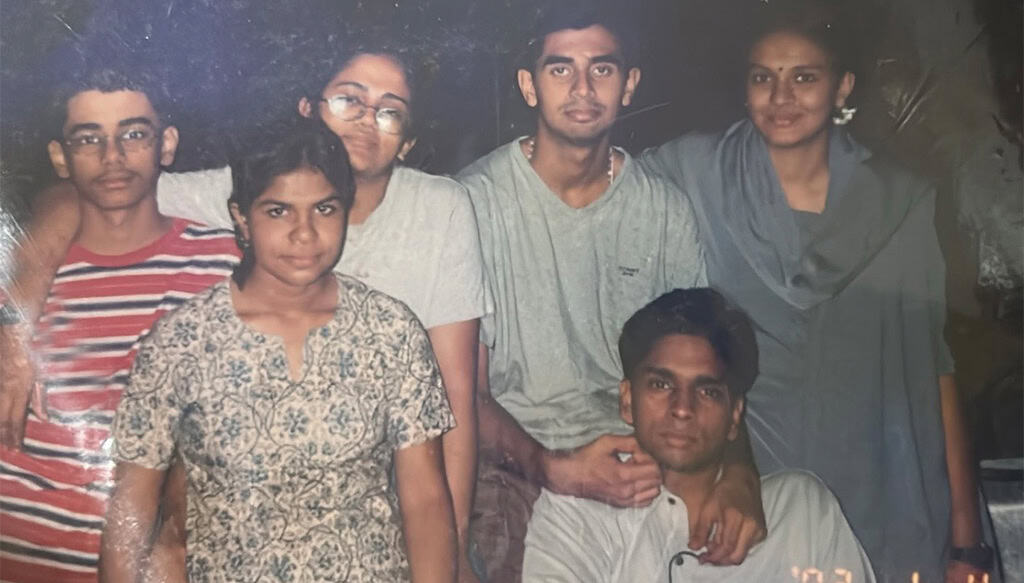
Every afternoon, without invitation or planning, a gang of twelve to fifteen of us would gather there. We sat from early afternoon until late at night. What did we discuss? No one really remembers now. There were laughs, loud arguments, serious debates, and occasional fights. The wall witnessed all of it silently.
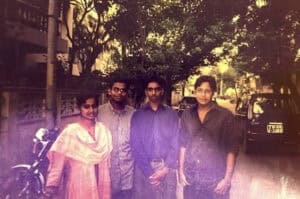 I was told we were the fourth generation of the Wall Friends. It started with my grandfather and his group, followed by my father’s generation, then my uncle and his friends, and finally us: cousins and neighbourhood boys who inherited the space without ever officially claiming it.
Cricket ruled our days. There was an unwritten rule then: play stopped at 6 p.m. By 5:45, we would start assembling around the wall. Some of us walked in, a few came on bicycles, and some parked their bikes nearby. By six, the Wall Friends were complete.
We were innocent in many ways, barely noticing the beautiful women who passed by, yet we were noticed by everyone else. It felt strange for people on the street if the Wall Friends were missing for a few days.
One of the most exhausting activities was fetching water. We had a few old mugs and, if we were lucky, one or two plastic bottles. The tap was inside a nearby house, and the walk felt long. There were turns, arguments, and fights over who would fetch water and who had to go next.
At around 8:45 p.m., like clockwork, the kulfi man would arrive. By 9 p.m., the group usually began to split, kulfi in hand. He cut the kulfi neatly, served it on leaves, and chatted with us for a few minutes. None of us remembers his name, but he felt like one of the Wall Friends. Hygiene never mattered; our immune systems were stronger then.
Another daily challenge was the bio-break. Anyone who left the wall instantly became the topic of discussion – his batting stance, habits, or personal life. So we held on as long as possible and often went in groups, just to avoid being talked about!
After witnessing four generations, one day my uncle decided to demolish the wall and rebuild it to a height of six feet. That marked the end. The wall was no longer climbable, and the Wall Friends slowly dispersed.
Today, most of us are spread across the globe. Yet the tag “Wall Friends” has never left us. Even in the post-Corona world, when we catch up virtually, the wall finds its way into every conversation, the stories, the arguments, and the smallest details we once discussed while sitting there.
A great local brand of Nungambakkam, built over four generations, came to a quiet close not with noise, but with time. None of us can climb that wall anymore.
But the memory? That stays forever.
Arjun Krishnan
arjun9616@gmail.com