When I married my Iyengar husband, I thought I had prepared for the cultural differences between us. But the real learning began in the kitchen and sometimes, at the temple.
It started innocently enough one afternoon when we were mixing rice and curry for lunch. I was gently fluffing the rice with my fingers and remarked, “Pesayaradhu makes it perfect, don’t you think?”
“Pesayaradhu?” he repeated, with mock horror, as though I’d committed some culinary sin. “You mean pisiyaradhu!”
“No, I mean pesayaradhu,” I said firmly, holding up my curry-stained fingers for emphasis. “It’s what you do when you mix rice. You pesay.”
He smirked. “No, you pisiy. That’s the correct term.”
“Pisiy?” I laughed. “That sounds like something a baby would say when they’re learning to talk!”
“Exactly,” he retorted. “And it still works better than pesay that sounds like you’re negotiating with the rice.”
“Oh, and pisiy sounds like you’re asking the rice to beg for mercy?” I shot back, unable to stop laughing.
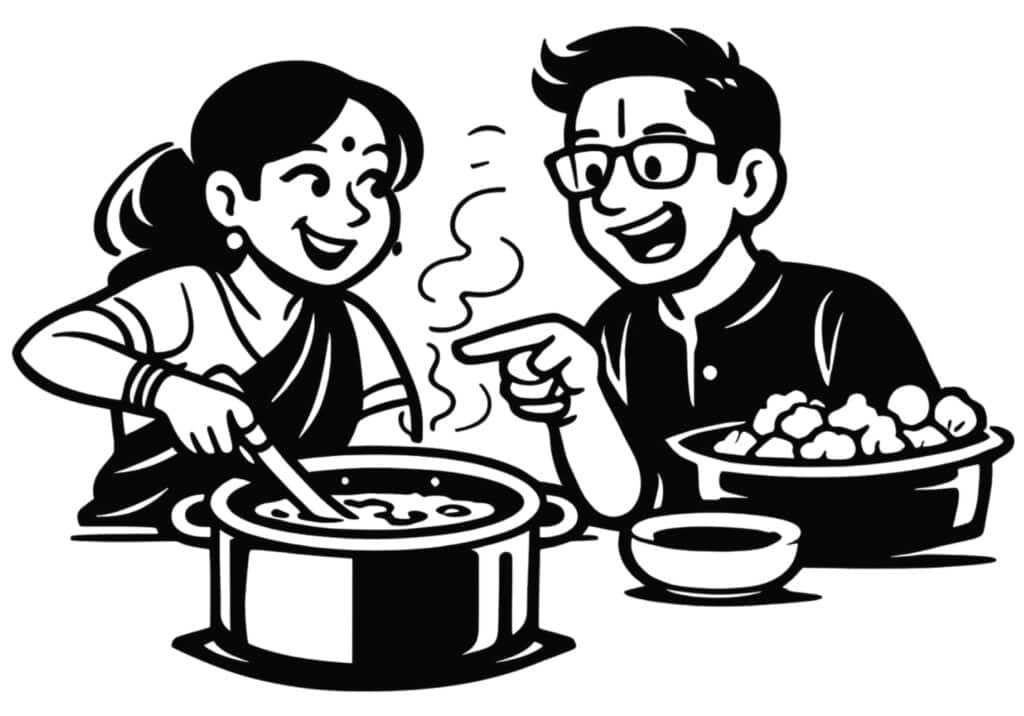 He grinned triumphantly, as though the debate had been settled in his favour. “You Iyers always overthink. We Iyengars just get it right the first time.”
“Is that so?” I asked, mockingly raising an eyebrow. “Tell me, what’s the Iyengar way of adding oil to a pan?”
Without missing a beat, he said, “We yennai kuthu.”
I froze. “Kuthu? You stab oil into the pan?”
“Not stab,” he said patiently, as though explaining something profound. “It’s more like placing it deliberately. Precise. Controlled.”
“Precise?” I repeated. “You’re pouring oil, not launching a space shuttle!”
He laughed. “Iyengar oil has discipline. Iyer oil is… freestyle.”
I shook my head, chuckling. “Freestyle oil wins every time. It doesn’t need a lecture to do its job!”
Our temple visits were no less entertaining. On our first visit together, I was in my usual mode, folding my hands in quick, reverent namaskarams every few minutes. My husband, on the other hand, stood perfectly still, arms relaxed by his sides.
“Aren’t you going to do a namaskaram?” I whispered.
“I am,” he replied. “I’m sevichufying.”
“Sevichufying?” I repeated, squinting at him. “You’re not even folding your hands. What exactly are you doing?”
“Listening,” he said with a serene expression. “It’s what we Iyengars do. We listen. No unnecessary movements.”
I stared at him, then at the priest, then back at him. “That’s it? Just standing there is sevichufying?”
He nodded, clearly proud of his stillness. “It’s more spiritual this way. You Iyers are so dramatic with all your namaskarams. Looks like you’re doing aerobics.”
I burst out laughing. “At least we’re engaged! You’re just pretending to meditate while your mind wanders to what’s for dinner.”
He shook his head, pretending to be offended. “You should try it sometime. It’s very dignified.”
“Oh, I’ll stick to my dramatic aerobics, thank you very much!” I said, folding my hands yet again. “At least the gods know I’m paying attention.”
One evening, as I was ladling steaming rasam into a bowl, my husband sniffed the air and said, “Ah, saathamadhu smells good today.”
I froze mid-ladle and turned to him. “Saathamadhu? This is rasam.”
He raised an eyebrow. “Same thing.”
“Same thing?” I gasped, clutching the ladle like a weapon. “Rasam is tangy, spicy, and lively. Saathamadhu is… watered-down daal with a personality crisis!”
He chuckled. “Saathamadhu is soulful, soothing, and refined. Rasam is chaos in a bowl.”
“Oh, please! Saathamadhu is just rasam that’s given up on life!”
He grinned, unbothered by my dramatics. “Call it what you want. It still tastes better my way.”
“Your way?” I laughed. “This is my rasam. If it tastes good, it’s because it’s not saathamadhu!”
We ended up laughing so much that neither of us cared what it was called. Though I did add an extra dash of spice — just to prove my rasam had more character.
Despite our teasing, there was something heartwarming about discovering these little differences. Like the time he suggested making karamedhu with vaazhakkai for dinner. I nodded confidently, thinking it was something exotic, until I realized he was talking about what we Iyers call curry or kaai at my parents’ place!
When I pointed this out, he rolled his eyes. “You call it curry, we call it karamedhu. Big deal.”
“It is a big deal,” I said, feigning indignation. “Poriyal sounds delicious. Karamedhu sounds like a battle plan.”
“Which is why it tastes better,” he quipped, earning a playful swat on the arm.
Over time, these small quirks stopped being differences and became inside jokes. He’ll now use “pesay” instead of “pisiy” just to make me laugh, and I’ve started teasing him about his “oil precision” whenever he cooks.
Through it all – whether it was karamedhu versus poriyal, sevikkaradhu versus namaskaram, or the ongoing rice-mixing debate — we found ways to celebrate each other’s quirks. It’s these moments of laughter, ribbing, and shared meals that remind me how much joy there is in bridging the gap between two worlds.
So, when people ask me how I adjusted as an Iyer girl married to an Iyengar, I tell them: “You vidu some love, kuthu a little humour, and everything falls into place.
A nice article that I can relate to. I am on the Sathaamudhu and Kariamudu side. The second parts of the words is are amudhu which can mean tasty or delicious. One more word I can think of is Tirukannamudhu for payasam.
T.K. Srinivas Chari