A Heartwarming Slice of Chennai: from the Page to the Stage
As I was taking in the events and reading stories about Madras Day, I couldn’t help but recall a refreshing play I had enjoyed watching in the last week of June at the Museum Theatre in Chennai. It captured an interesting slice of life in urban Chennai and would have fitted in really well as part of the Madras-Chennai celebrations! It brought the residents of an apartment in Chennai – described in a book, to life.
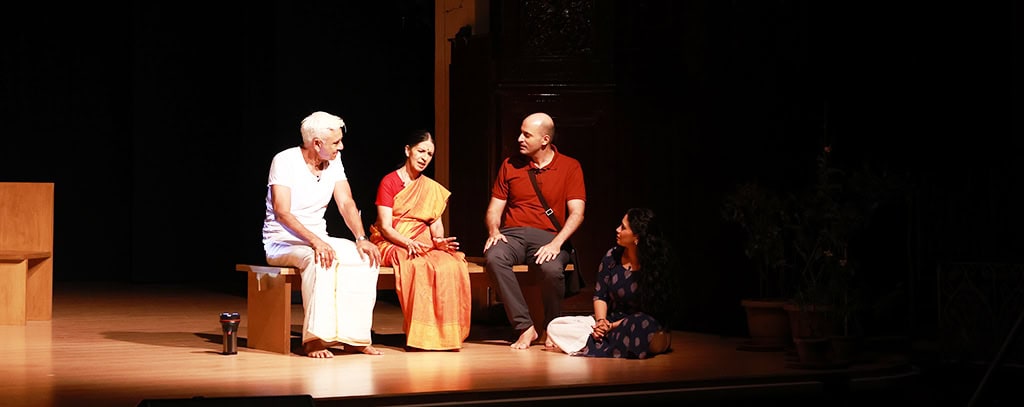
In Hema Sukumar’s debut novel, Minor Disturbances at Grand Life Apartments, Chennai is far more than a backdrop; it is a living, breathing protagonist. Set within a middle-class residential block under threat from encroaching property developers, the novel offers an exploration of “Chennai-ness” and what it means to be one with the city. The novel recently leaped from the page to the stage when theatre director Nikhila Kesavan brought the book to life through her original stage adaptation for The Madras Players. Fittingly performed at Chennai’s historic Museum Theatre in Egmore, the play intentionally utilized a minimalist set to keep the focus purely on the intimate conversations and humour of the tenants, brilliantly capturing the book’s deep sense of home and belonging.
The story and play expertly navigated the liminal space between the nostalgia of old Madras and the bustling, concrete reality of modern Chennai. They served as a heartfelt tribute to a city that holds fast to its roots while hurtling toward the future, captured through the everyday lives of its residents.
At the heart of this celebration is the physical space of the Grand Life Apartments itself. Amidst the heat, traffic, and pollution of the expanding metropolis, the apartment block’s warm, lush gardens serve as an urban sanctuary. They are a testament to the old-world charm of Chennai, where shaded courtyards and blooming jasmine once defined the landscape before the aggressive rise of luxury high-rises. This green haven cultivates a profound sense of community. When power cuts, a quintessential hallmark of Chennai summers, plunge the city into darkness, the residents don’t isolate themselves. Instead, the outages draw them out together onto their balconies and into the gardens, turning minor disturbances into moments of shared humanity. Tamil proverbs and sayings, converted into English, peppering the dialogues were delivered with timing and panache which brought the house down every time!
Chennai is inextricable from its culinary heritage, and the book leans into this with joyous abandon. It is drenched in the sensory experiences of South Indian cuisine, viewed both through the comforting familiarity of the local residents and the awe-struck palate of Jason, a heartbroken British (or Canadian, in Nikhila’s world) chef who impulsively moves to India to escape his past, and keeps dipping into the pages of “Cook and See”! Any talk of food in Chennai is incomplete without an ode to Filter Coffee. In Hema Sukumar’s view, it is not just a morning beverage but the social glue of the apartments and grounds the characters in a shared, daily ritual that pays no heed to their differences in age, background or feeling.
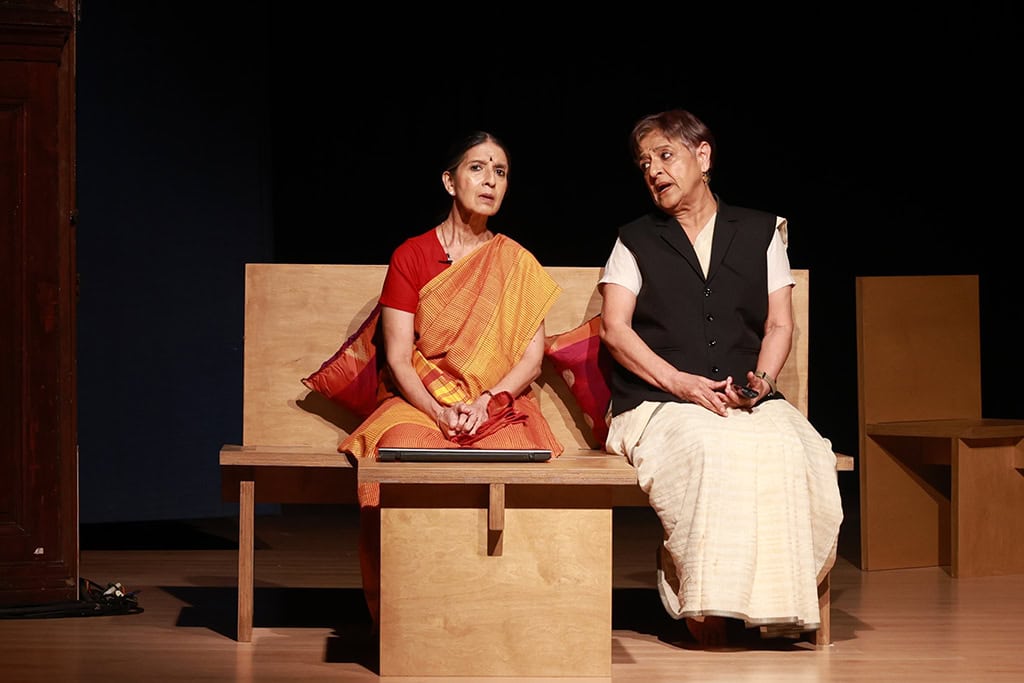
Where this work truly shines is in its refusal to rely on tired, exoticized tropes, actively avoiding a sanitized or “Karan Joharized” portrayal of India. The evolution of Madras into modern Chennai is portrayed with refreshing honesty. Yes, there is the beauty of traditional Carnatic music softly playing from a window and the pious morning religious offerings. But there is also the gritty reality of urban corruption, aggressive industrial development, and wealth inequality. The struggle of Mani, the apartment owner fighting off a predatory building company to save their home, reflects the very real spatial and cultural anxieties of a city rapidly losing its heritage to concrete sprawl.
Through Minor Disturbances at Grand Life Apartments, both as a novel and a theatrical experience, Nikhila and Hema have attempted to create a cultural time capsule of the things they love about their home, but also about their fears for the future. It captures a distinct essence of Chennai-ness, which is also in many ways a part of this time capsule. The only thing that’s constant about this city is change, but I find myself having faith that this theme will be revisited by future generations of writers and artists with their own version of this wonderful city.
Anaivarum 2: A celebration of inclusivity, heritage and the many ways of seeing Madras
Anaivarum 2: Echoes of Existence curated by Madras Photo Bloggers and Deaf Artists NFT Collective, in collaboration with namveedunamoornamkadhai, Higginbothams, Goethe-Institut/Max Mueller Bhavan and Rotary Club of Chennai Crown from 28 to 30 August at different venues, brought together deaf communities through exhibitions, photography, community stories, visual vernacular, Indian sign language poetry, music and heritage-based storytelling. Thirupurasundari Sevvel (architect planner, researcher, educator, storyteller and head of Nam veedu Nam oor Nam kadhai) tells us it was a unique way of “celebrating the Inclusivity, Heritage and the Many Ways of Seeing Madras”.
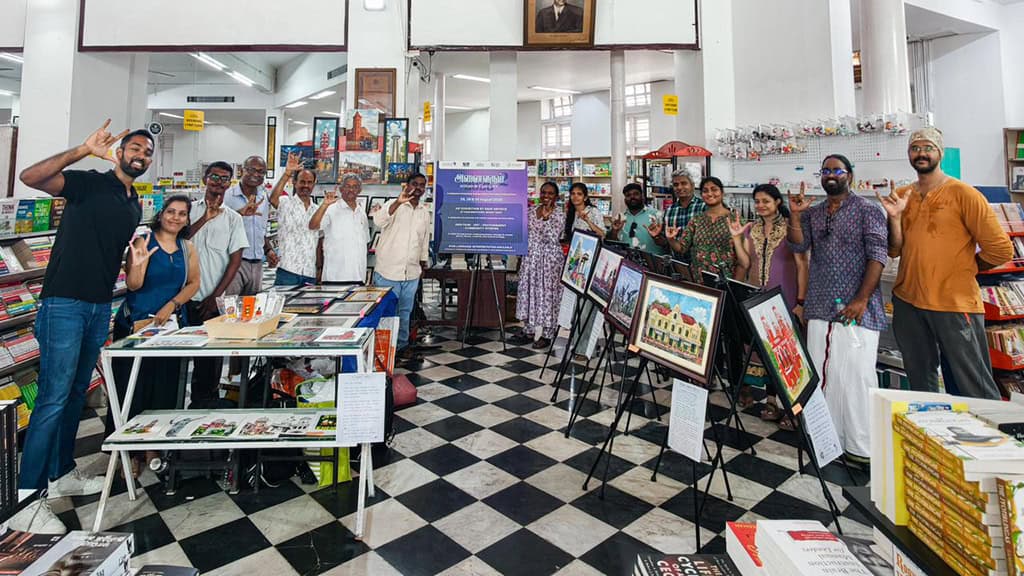
A vibrant art exhibition featuring 12 deaf artists, each reflecting Chennai through their own unique artistic perspective, was part of the Madras Week celebrations; it was displayed at Alliance Francaise for a day and at Higginbothams for three days. Through different artistic expressions, the artists explored what Chennai means to them — not only as a place, but as a city filled with memories, movement, identity and belonging. Each artwork offered a personal way of seeing and experiencing Madras, creating a collective visual narrative that celebrated both the city and the creativity of the deaf community.
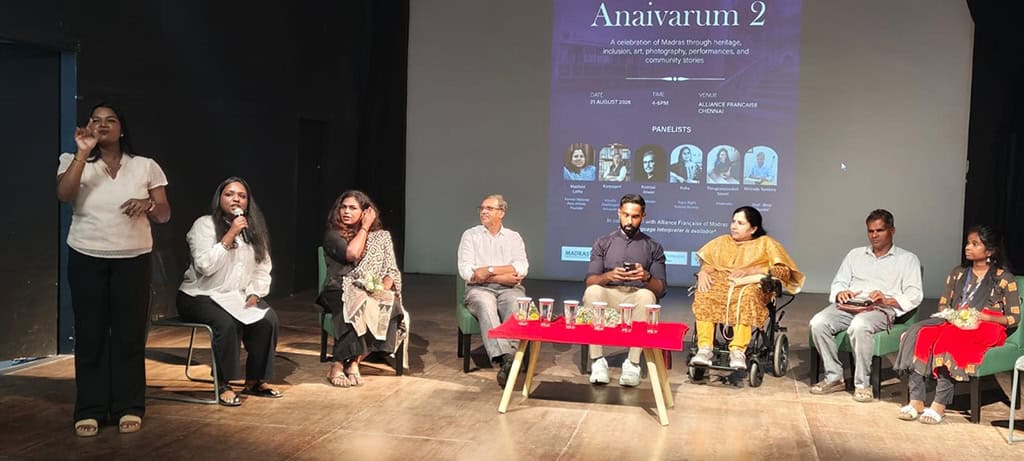
A panel discussion, reading and performances were also staged exploring the experience of the city through a deaf perspective.
Sign language interpretation was organised throughout the event, ensuring a more inclusive experience for everyone.