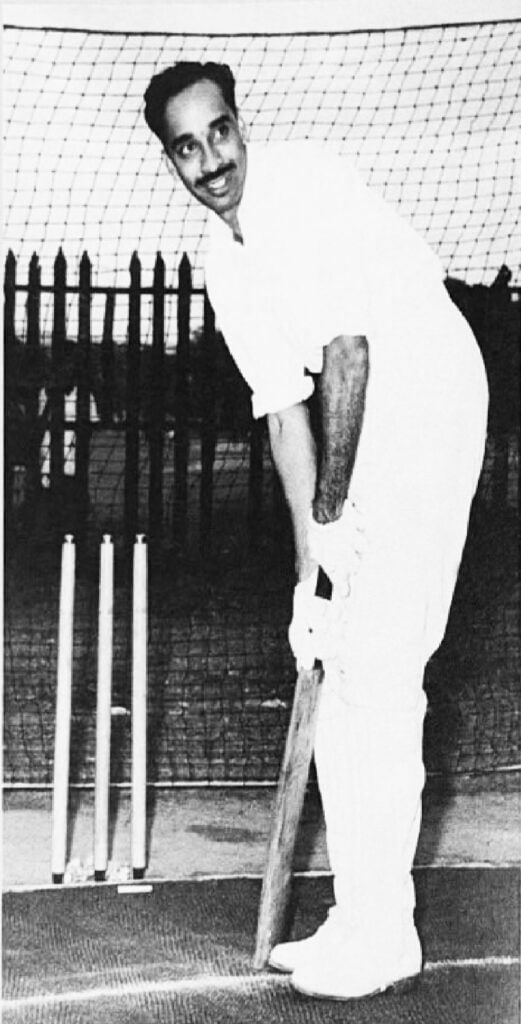
In the passing of CD Gopinath the world of cricket has lost a respected elder. He was at 96 the oldest test cricketer at the time of his demise. Madras Musings has carried several articles about his prowess at the game and for those who are interested, we refer them to MM issue Vol XXXIII No 1, April 16-30, 2023 for a comprehensive profile. For further details, there is V Ramnarayan’s biography titled Beyond Cricket, A Life in Many Worlds (Wordcraft, 2023).
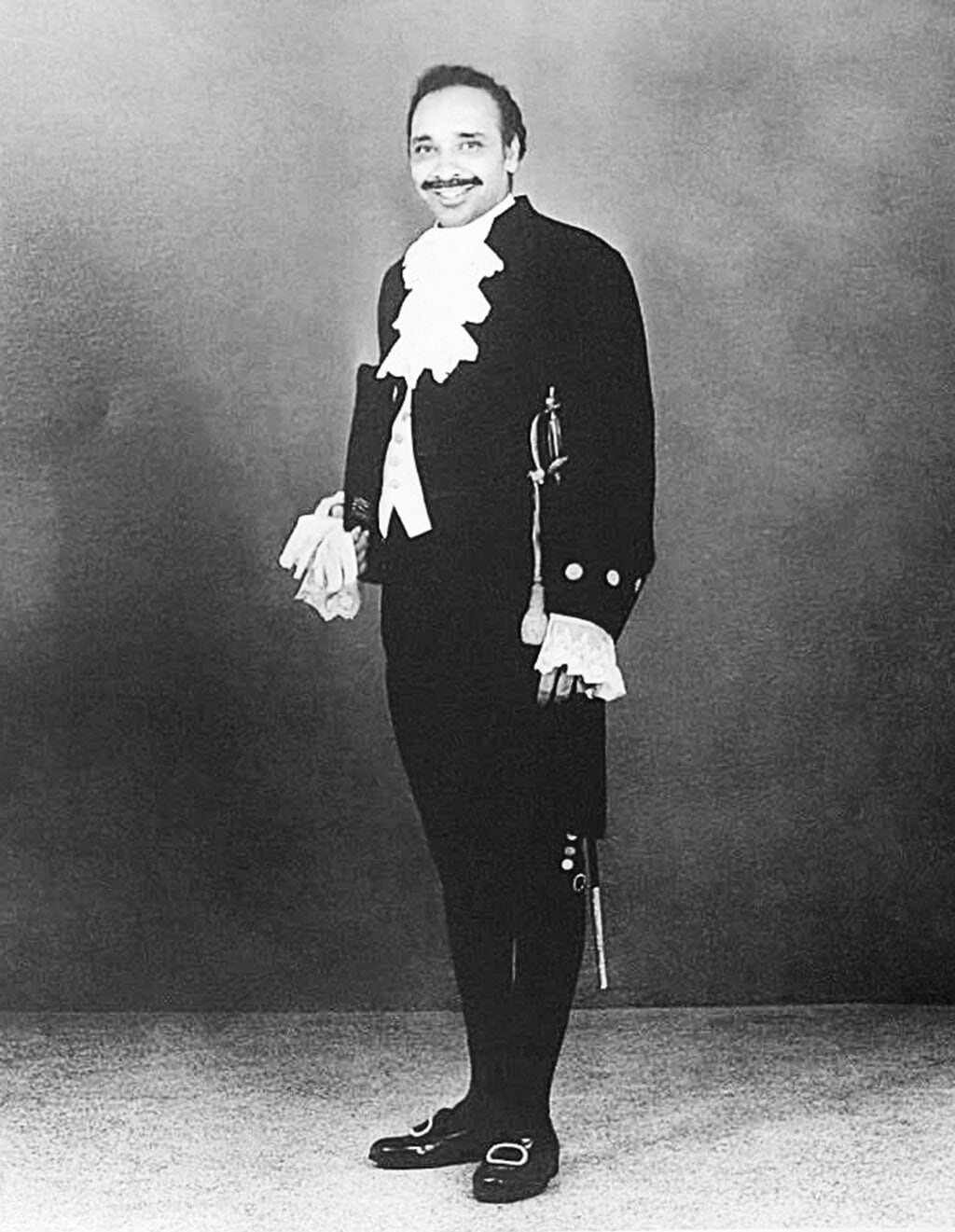
Gopinath as Sherrif of Madras, 1976/1977.
The title itself aptly summed up Gopinath, for he was a man of many facets. A graduate of Madras Christian College, Gopinath was a boxwallah for much of his life, joining the British company Gordon Woodroffe (GWC). He rose to become its first Indian Managing Director in 1966. He played an important role in stabilising the operations of the company. The late sixties were to see most British companies in India run into choppy waters, thanks to increasingly restrictive legislation. But Gopinath it was that brought order. GWC retained its position as a leather and shipping major. In the former activity, Gopinath made sure the company was well-represented in exhibitions abroad and secured an export market for itself. In shipping too, he was the company’s human face, something that it would come to rue.
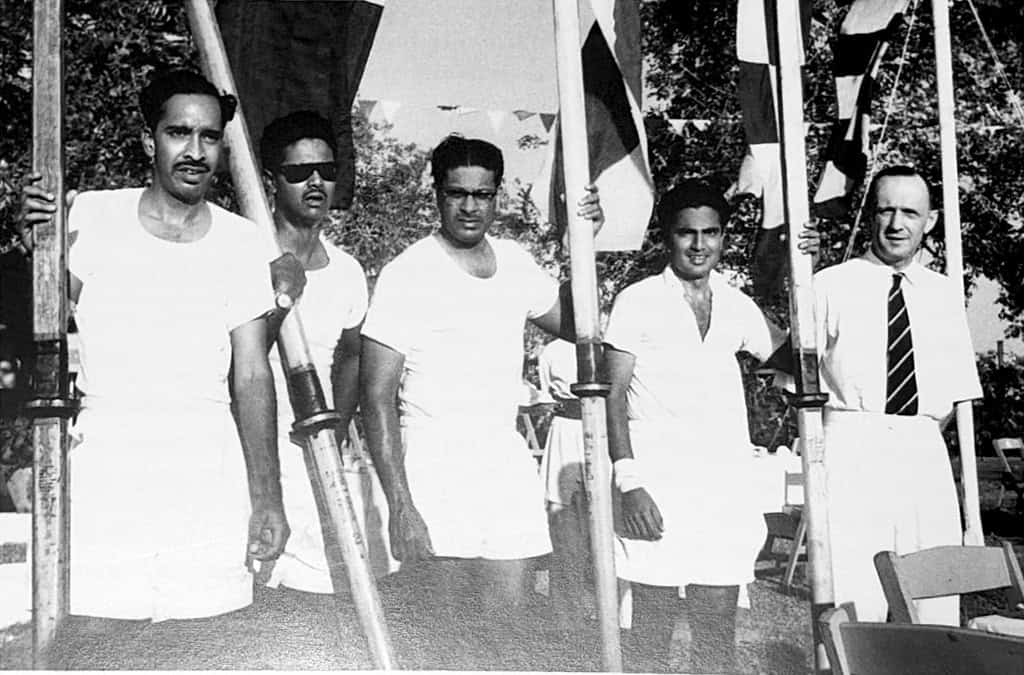
An oarsman too – seen extreme left.
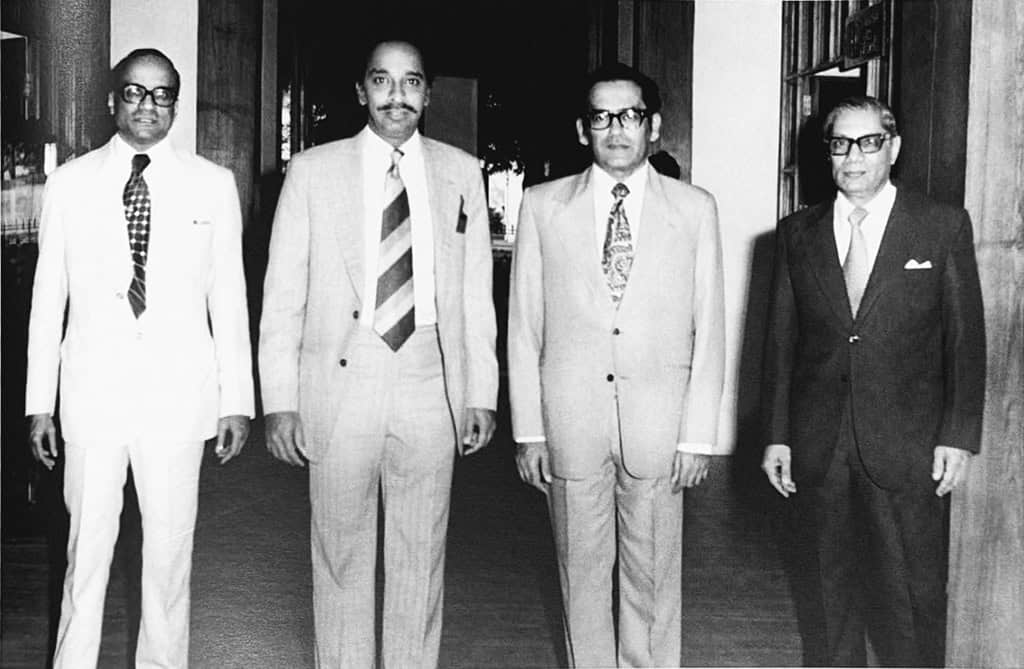
Leading Indianiasation at the MCCI.
 In 1964, GWC’s ownership in England changed hands and the new man at the helm was Eric Sosnow, journalist turned businessman. He began suggesting new ways of growth in India, much of it not strictly as per law. Many left the company and Gopinath too did so, in the mid 1970s. Using his contacts, he secured the contract for representing the Clan shipping line for which GWC took him to court, and lost. The company’s days were numbered thereafter though its eventual demise was in the hands of the Chabbrias.
Gopinath did well in his shipping activity. Outside of it, even when he was with GWC, he helped in the Indianisation of the Madras Chamber of Commerce (now the Madras Chamber of Commerce and Industry). Till the early 1960s this was essentially a British dominated body, and it was executives such as Gopinath who gave it a new direction. He served as its president in 1976. He had similarly helped other crusty British institutions to Indianise too – he was President of the Madras Cricket Club in 1966 and the Madras Club from 1976 to 79. There is no doubt that he, and others like him played crucial roles in getting these conservative establishments to see the light, and then gradually make the transition to a new world. He served as Sherrif of Madras too, in 1976/1977.
Post retirement, Gopinath divided his time between Madras and Coonoor. He was always accessible for clarifying doubts on various aspects of the city’ corporate and sporting histories. He certainly helped me a lot when I wrote the history of the Madras Chamber of Commerce and Industry in its 175th year. And he was generous with photographs too. S. Muthiah too relied on him for many clarifications.
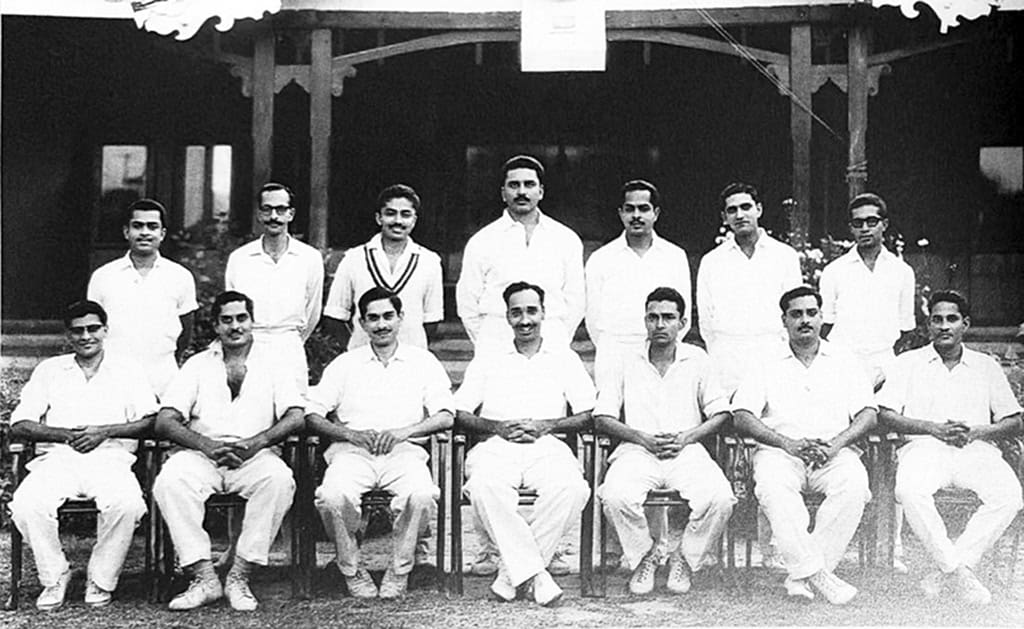
Seated 2nd from left with the winning Madras Ranji Trophy Team, 1954/1955.
Early in the new millennium, Gopinath made it to the news for an interesting reason. A bison, which he named Bada Bheem, developed a liking for the grass in the compound of his Coonoor home and made it a part of its daily beat. Bada Bheem was photographed, seated behind Gopinath. The story had interesting sidelights as he revealed to me at a chance meeting in the Coimbatore airport. Bada Bheem thought nothing of leaping over the compound wall and landing with a terrific thud in the garden. But he could not jump back on to the road when his meal was done. That meant someone in the house had to run out, open the gate, and run back before Bada Bheem lumbered to his feet and sauntered out. On some days Bada Bheem went to visit the neighbours and some actually called Gopinath to complain that HIS bison was in their garden! At a subsequent meeting Gopinath told me that Bada Bheem had stopped coming and he hoped all was well with him.
My last personal meeting with this grand old man was when he released the book I wrote to commemorate 175 years of the Madras Cricket Club. Covid was then raging and the book, titled 175, Not Out!, was released at the MCC in September 2021 to a limited set of invitees, all masked. The rest of the members saw it via live relay. When it came to the book release, the volume was so tightly wrapped that Gopinath, at 91, struggled to open it. I had to lend a helping hand, and between us we managed to tear the wrapping paper apart. There was nobody to take the shreds (social distancing remember?) and so there was nothing to be done but for me to hold it all in my hands as Gopinath held the book aloft. We both laughed heartily over this.
Nobody else seemed to have noticed. But nothing escaped N. Sankar. The big boss of the Sanmar Group was watching it remotely and that evening called me – “What sir, you were left holding the wrapper!”
CD Gopinath represented a cultured and refined world. One that we left behind a long while ago. As S. Muthiah wrote in 2013 – “Gopi played his Test cricket in the 1950s. How many remember that era today when India won its first ever Test match in 1951, at Chepauk, Gopi taking the catch to end the innings victory?”
(The photos for this article have been sourced from Beyond Cricket, a Life in Many Worlds; Championing Enterprise, 175 years of the Madras Chamber of Commerce and Industry; 175, Not Out! 175 years of the MCC.)