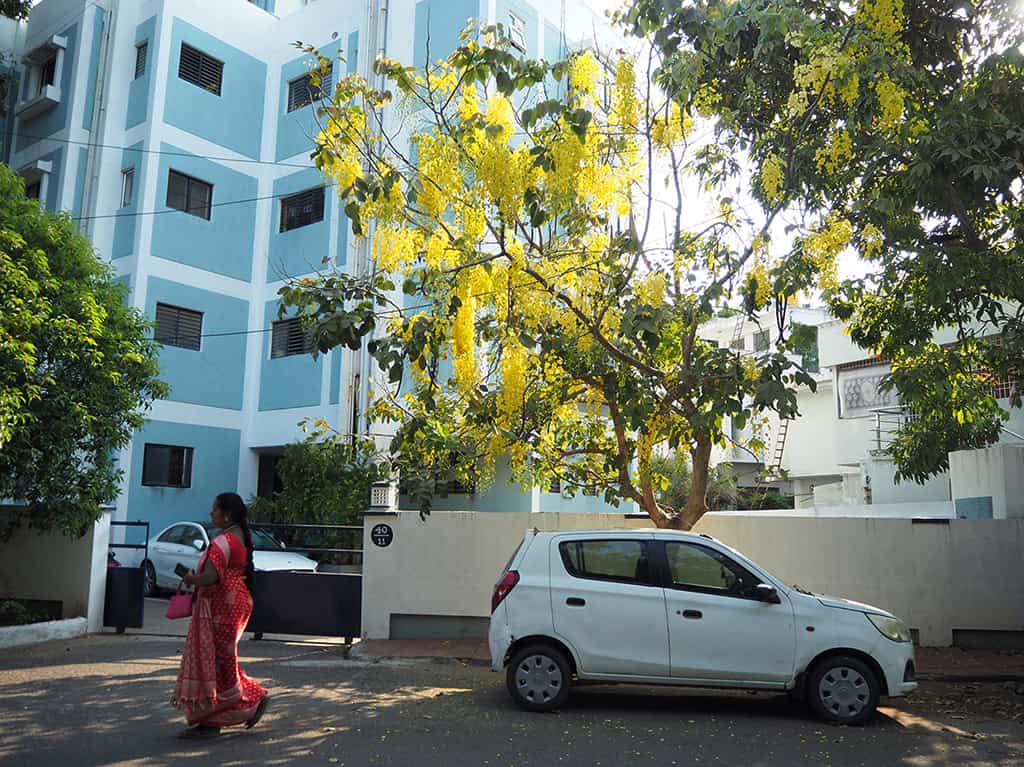
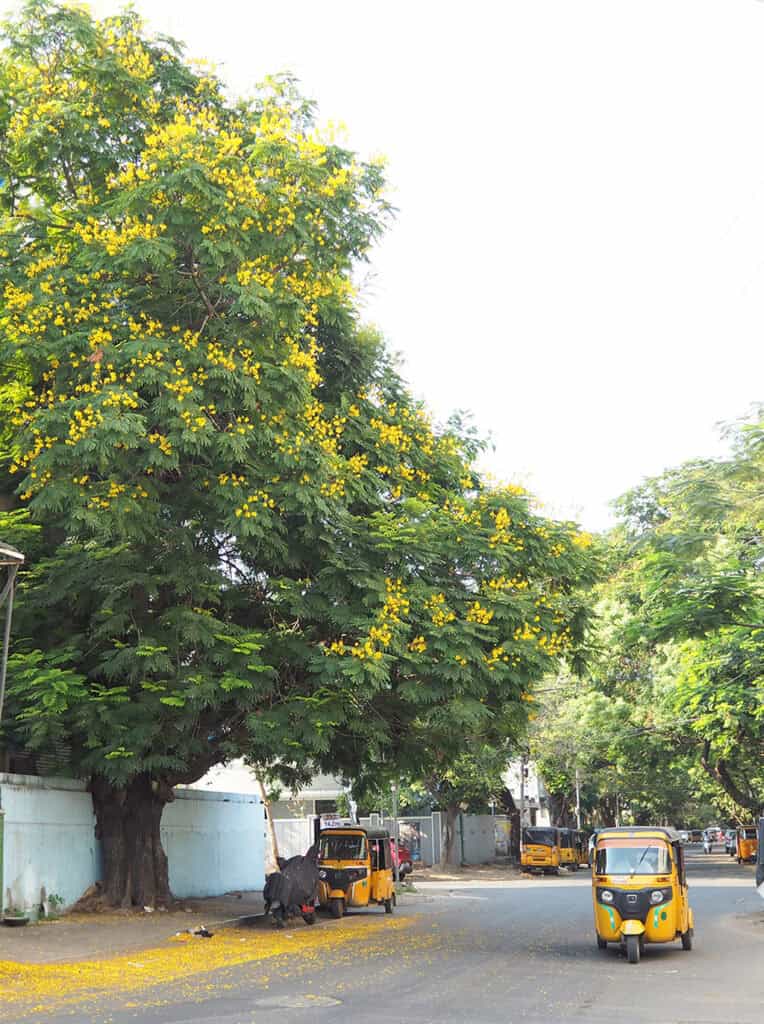
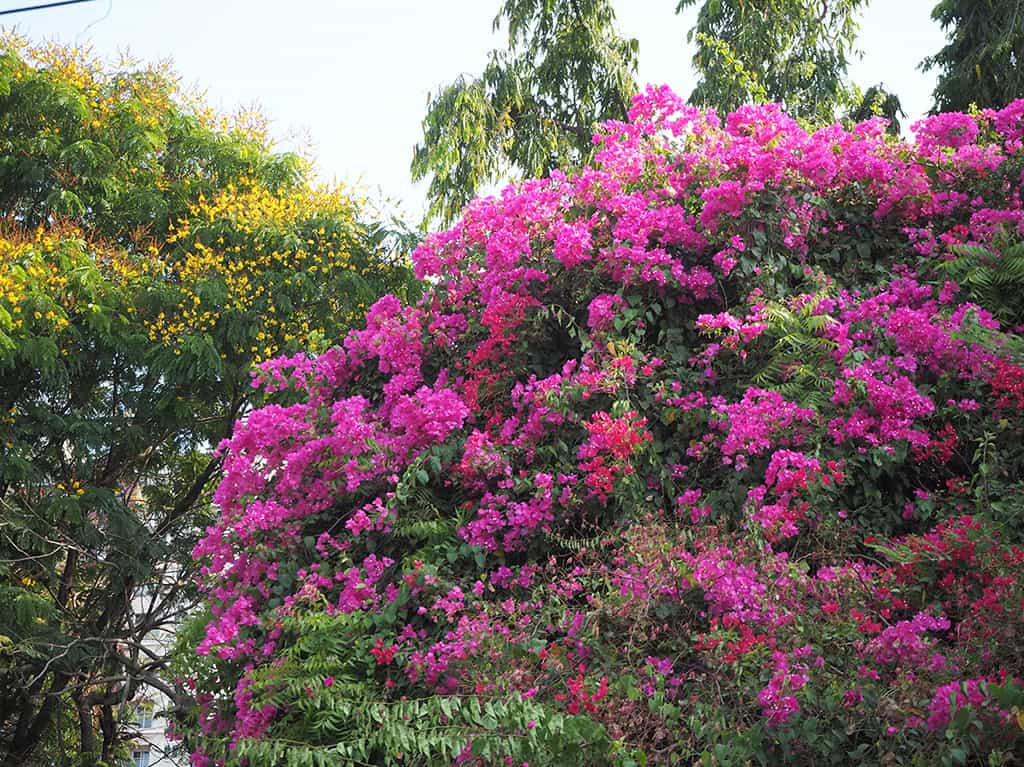
It’s that time of the year in town when the Copperpod trees, also known as Yellow Flame tree, are aglow. I don’t just see the flowers on the trees, they carpet my neighbourhood roads. Just ahead, I perk up to see a burst of bougainvillea in its most common colour-magenta. The Raintree outside my dwelling has unusual flowers, partly pink, on its crown as I see from my terrace. These flowers burnished by the sun, turn dark brown and then fall. The Frangipani tree in our apartment imperceptibly sheds its especially soft flowers tempting one to pick them up and, outside my neighbour’s house, I catch sight of the Golden Shower or Konrai tree in full bloom. I know that its flowers are offered to Lord Krishna on Vishu (April 15 this year) when Malayalis celebrate their new year. This April 14, on the Tamil Varusha Pirappu, the tiny flowers of the neem tree went into the manga pachadi – a raw mango jam, made at my place; prepares us to take the bitter with the sweet with the sour.
If the season of flowers is here, fruits follow in their wake. The watermelons are the first to reach the streets, ready for consumption in crescent-shaped slices and sought after by two-wheeler commuters and pedestrians pausing for a respite from the hot sun. While the cantaloupes (mulam pazham) and musk melons (kirni) are of passing interest to me, what I eagerly looked forward to is the arrival of the much-vaunted king of them all, the mango. ‘Mampazham’ more like it! I make a promise to myself that I will savour as many varieties as I can and learn to tell my Imam Pasands from my Javvadhus. On April 21 I made my first purchase of the Sendura from a pushcart stationed on my cycle route to the temple. The vendor wasn’t boasting when she said that they would taste like mithai. However, I was disappointed; not all the pieces turned out that good! No point having set the bar high with the season just started, right? A week later, one morning, we asked for the large Imam Pasand aka Himayat mangoes being vended on the streets in a tricycle. We were told to let it ripen for a day. In the grip of a mood for mangoes, I didn’t think twice about picking up a kilo of Alphonso or Hapus at the nearby Pazhamudir Nilayam that evening at 365 rupees a kilo! The next day, we promptly cut an Imam Pasand and were delighted to see it ripe and ready but postponed eating it until it was chilled. Well worth the wait of a day and a half.
 Later, I set to work on the smaller Hapus. My taste buds told me not for nothing did it enjoy the reputation of the king of mangoes. Sweet and flavourful! On May 10, giving in to the temptation of buying a kilo of the exotic-sounding and looking ready-to-eat Javvadu, I found it not as tasty as I had fancied. Reading that ‘Banganapalli is the king of slices and Alphonso rules the pulp,’ I am reminded of little tussles at family meals over kadhuppu or kottai. The Rumani also called Apple Rumani, which has a small seed, lots of pulp and is easily identifiable, arrives well into the season and Neelam at the fag end. There are more like Malgova, Peethar, Dasheri (from UP) and Rasalu to name a few. I have heard from vendors that the mangoes from the groves near the city’s Madhavaram Milk Colony are special. Mangoes from Thathachariyar’s orchard in Srirangam are also talked about highly. There is also the Hanu Reddy farm near Guduvanchery which has a festival around the mango this time of the year. Taking the sting off the heat of a Madras summer is the pleasure of gorging on the fruit and its preparations. Even as the summer gets unbearable, the quality of mangoes arriving in the markets gets better. The season is also about indulging in mukkani – a blend of mango, jackfruit and banana marinated in honey.
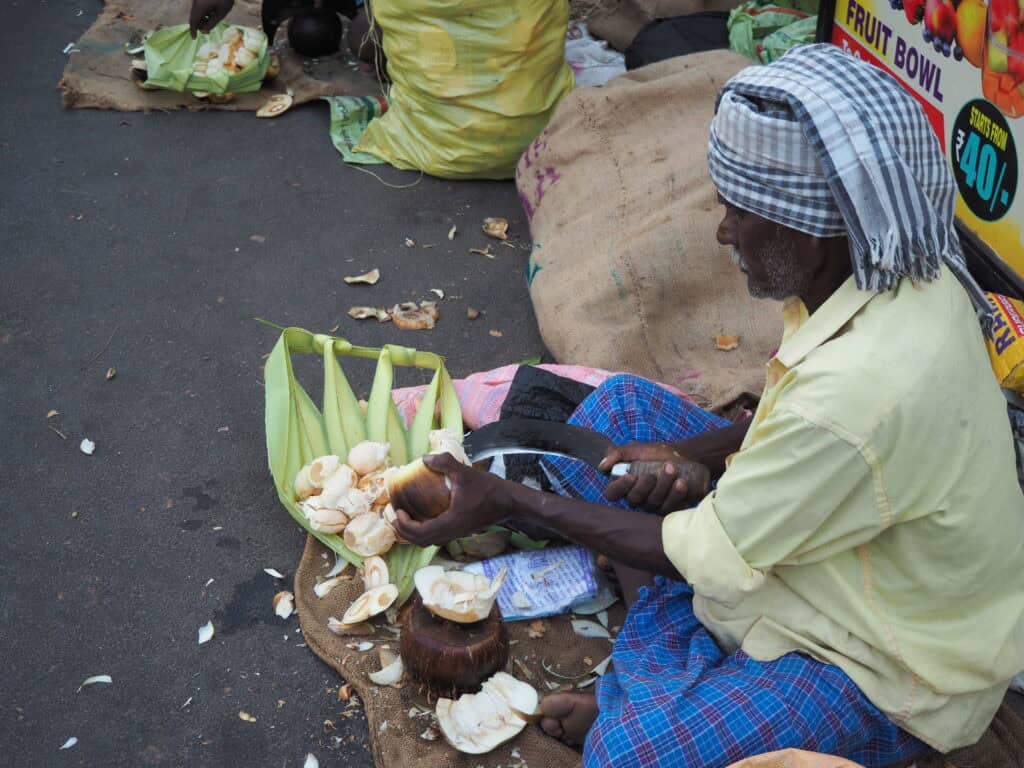
The palmyra fruit or nungu (ice apple) has its place under the Summer Sun. I sought out a man who had brought the fruit from Marvathoor. A dozen for 100 rupees. Peeling the jelly-like inside portion of the fruit is a sticky and slippery business but worth the effort if you want to stay hydrated — the water content of an ice apple is 92-94 per cent. India has the highest number of palmyra trees in the world and around 60 per cent of them are in Tamil Nadu. And, yes, the palmyra is the state tree.
Hi Srinivas,
Enjoyed it thoroughly. Very informative contents. Truly blessed to have the opportunity of enjoying all the seasonal, natural delicacies of our region, enabling us to keep us healthy as well.