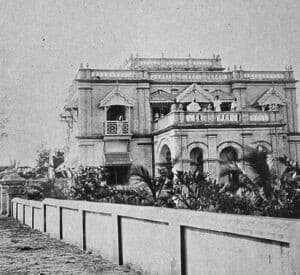
 The Queen Mary’s College authorities may have deemed it fit to demolish Beach House ‘as it had no heritage value’ but we beg to differ. Built in the 1880s, it was one of the few residences facing the Marina. It served as the residence of S Subramania Iyer, legal luminary, who in 1895 became a judge of the High Court of Madras. He was the first Indian to serve as acting Chief Justice of the High Court as well. While on the bench, he sat in judgement in landmark trials such as those of Arbuthnot & Co and the Tirupati Mahant case – trials that shaped modern Indian thought. He served as Vice Chancellor of the University of Madras.
He was a founding member of the Indian National Congress and after retirement, became a champion of India’s freedom, aligning with Annie Besant’s Home Rule League. When he was chastised by the Viceroy and the Secretary of State for India in 1917 for writing to President Woodrow Wilson of the US, stating that that country should not aid a colonial power such as Britain in WWI, he surrendered his knighthood in protest. This was before Rabindranath Tagore did it in 1919.
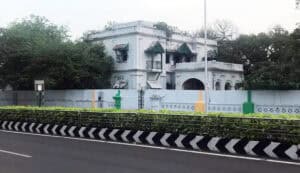 So much for the historicity of Beach House, which like Beach House itself, was forgotten just because it did not find mention in a listing of heritage structures in the city.